
Best Time of Year to Run Solar Ads: A Seasonal Demand Calendar for Installers
By SolarLeadAds Team · September 2, 2026
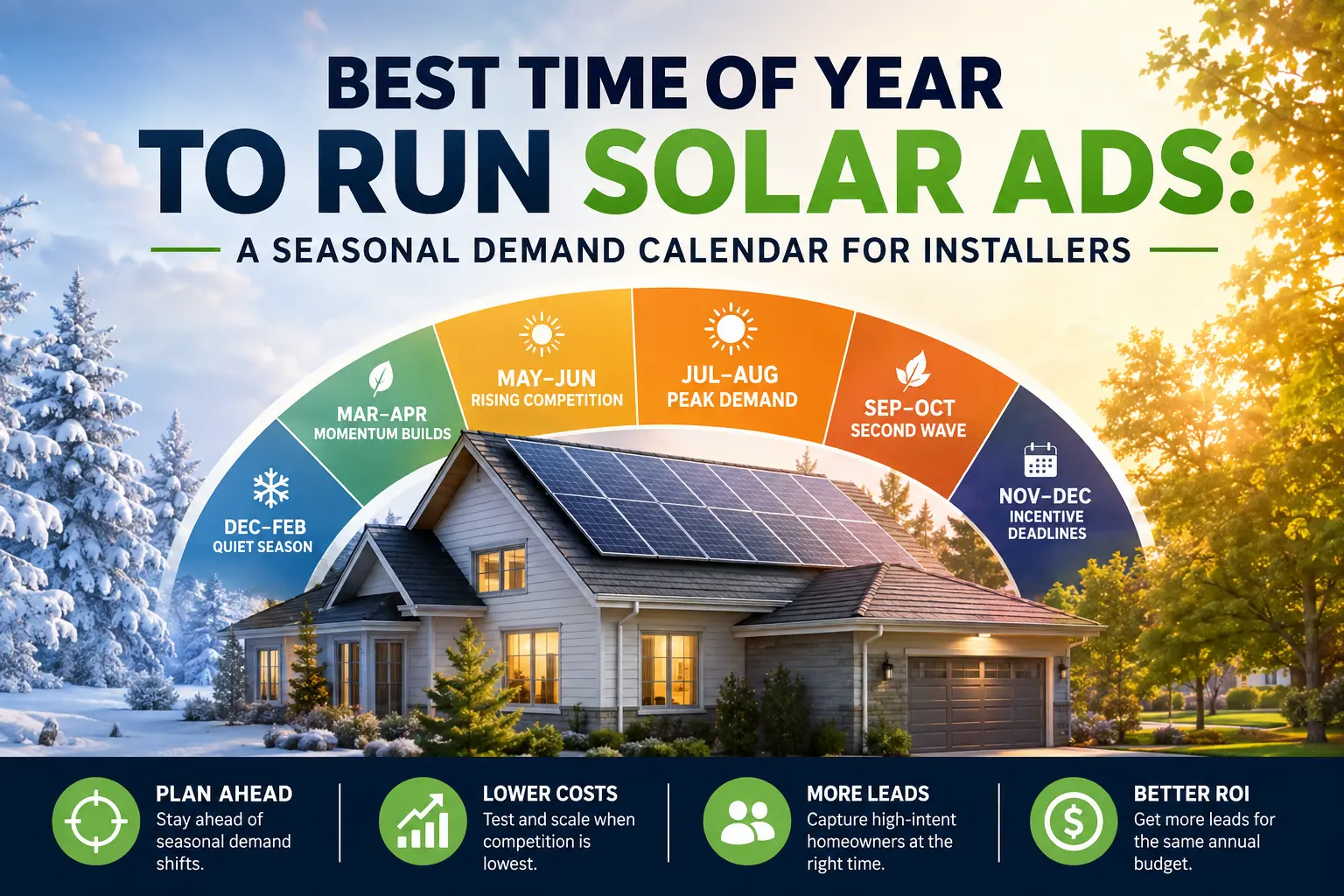
TL;DR: Solar ad costs and demand rise in spring and around tax-incentive deadlines, dip in the depths of winter, and spike again with summer electric bills. Planning creative refreshes and budget shifts around this calendar — instead of running flat spend year-round — helps installers get more leads for the same money.
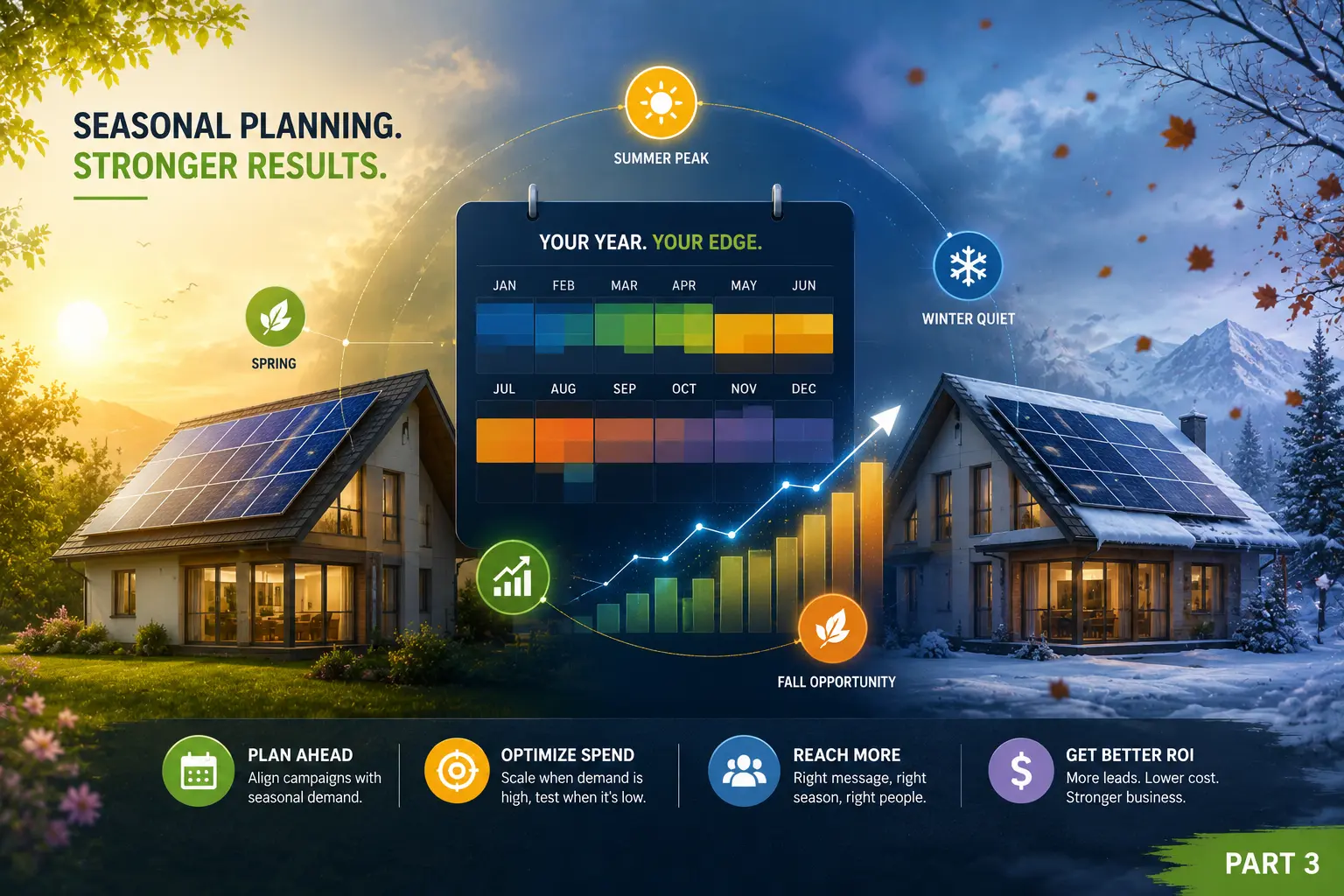
Solar demand isn't flat throughout the year, and neither is the cost of reaching that demand on Meta. Homeowners think about solar differently in January than they do in July, and competition among advertisers rises and falls with that shift. Planning your ad spend and creative around this pattern — rather than running the same campaign on autopilot all year — is one of the simplest ways to improve results without increasing budget.
Winter (Dec–Feb): The Quiet Season
Demand and search interest for solar typically dip in the coldest months, especially in colder climates where homeowners are focused on heating bills rather than long-term energy projects. Competition among advertisers also tends to ease slightly, which can mean lower cost per lead — but with fewer people actively considering solar overall.
What to do: This is a strong window for brand-building and retargeting past inquiries rather than pushing hard on cold-audience volume. It's also a good time to refresh creative and test new angles before the busier months arrive, since testing is cheaper when competition is lower.
Early Spring (Mar–Apr): Momentum Starts Building
As weather warms and homeowners start planning home improvement projects for the year, solar interest typically picks up. This is also when many regions see renewed attention around tax season, since some homeowners use refunds or year-end financial planning to consider bigger purchases like solar.
What to do: Start scaling ad spend gradually rather than jumping straight to peak-season budgets. This is a good window to introduce fresh creative angles before the summer competition intensifies.
Waiting until peak summer demand to test new ad creative means testing in the most expensive, most competitive window of the year. Testing in early spring is almost always cheaper.
Late Spring & Early Summer (May–Jun): Rising Competition
This period often sees rising electric bills as air conditioning use ramps up, which gives homeowners a very tangible, visible reason to consider solar. Naturally, more installers are advertising during this window too, which tends to push cost per lead upward across the board.
What to do: Lean on retargeting audiences built up over the previous months, since warm audiences tend to convert at a lower cost than pure cold traffic during high-competition periods. Fresh, tested creative matters even more here, since a stale ad competing in a crowded auction underperforms faster than usual.
Peak Summer (Jul–Aug): The Busiest Window
Electric bills are often at their highest, homeowners are acutely aware of their energy costs, and search and social interest in solar typically peaks. This is usually the most expensive time to advertise, but also when the largest pool of in-market homeowners is actively engaging with the topic.
What to do: This is generally the strongest window to scale spend if your funnel and follow-up process are already dialed in — it's not the time to be testing a brand-new landing page or an unproven sales script for the first time.

Early Fall (Sep–Oct): A Second Wave
As summer electric bills arrive and homeowners see the financial impact firsthand, a secondary wave of interest often follows a few weeks later. In many regions, this also overlaps with the tail end of favorable weather for installation crews, which can be a genuine, practical urgency angle in ad creative ("get installed before winter").
What to do: Messaging around "avoid next summer's bill" or "get installed before the weather turns" tends to perform well here, giving homeowners a concrete reason to act now rather than wait.
Late Fall & Incentive Deadlines (Nov–Dec)
Depending on your region, year-end tax incentive deadlines can create a genuine urgency spike — homeowners racing to lock in a rebate or credit before it expires or changes. This period requires checking current, region-specific incentive rules each year, since programs and deadlines shift.
What to do: Deadline-driven messaging ("lock in this year's incentive before it changes") tends to be highly effective here, but only when the claim is accurate and current — always verify the specific incentive details for your region before running this kind of ad.
Regional Differences Matter
This calendar reflects general seasonal patterns in the US, UK, and Australia, but exact timing shifts by hemisphere and climate — Australia's summer falls opposite the US and UK calendar year, for example. Local weather patterns, utility rate structures, and regional incentive deadlines should always take priority over a generic calendar.
The Bottom Line
Treating your ad spend and creative calendar as a year-round, unchanging campaign leaves performance on the table. Planning around these seasonal shifts — testing when competition is low, scaling when demand peaks, and using deadline urgency when it's genuinely accurate — consistently gets more leads for the same annual budget than a flat, always-the-same approach.
See Our Seasonal Campaign Packages Get a Free Lead AuditWant leads like this for your solar business?
We run exclusive Meta ad campaigns for solar installers, sellers, and technicians — no long-term contracts.
Get a Free Lead Audit