
Facebook & Instagram Ads for Solar Companies: A 2026 Beginner's Guide
By SolarLeadAds Team · August 28, 2026
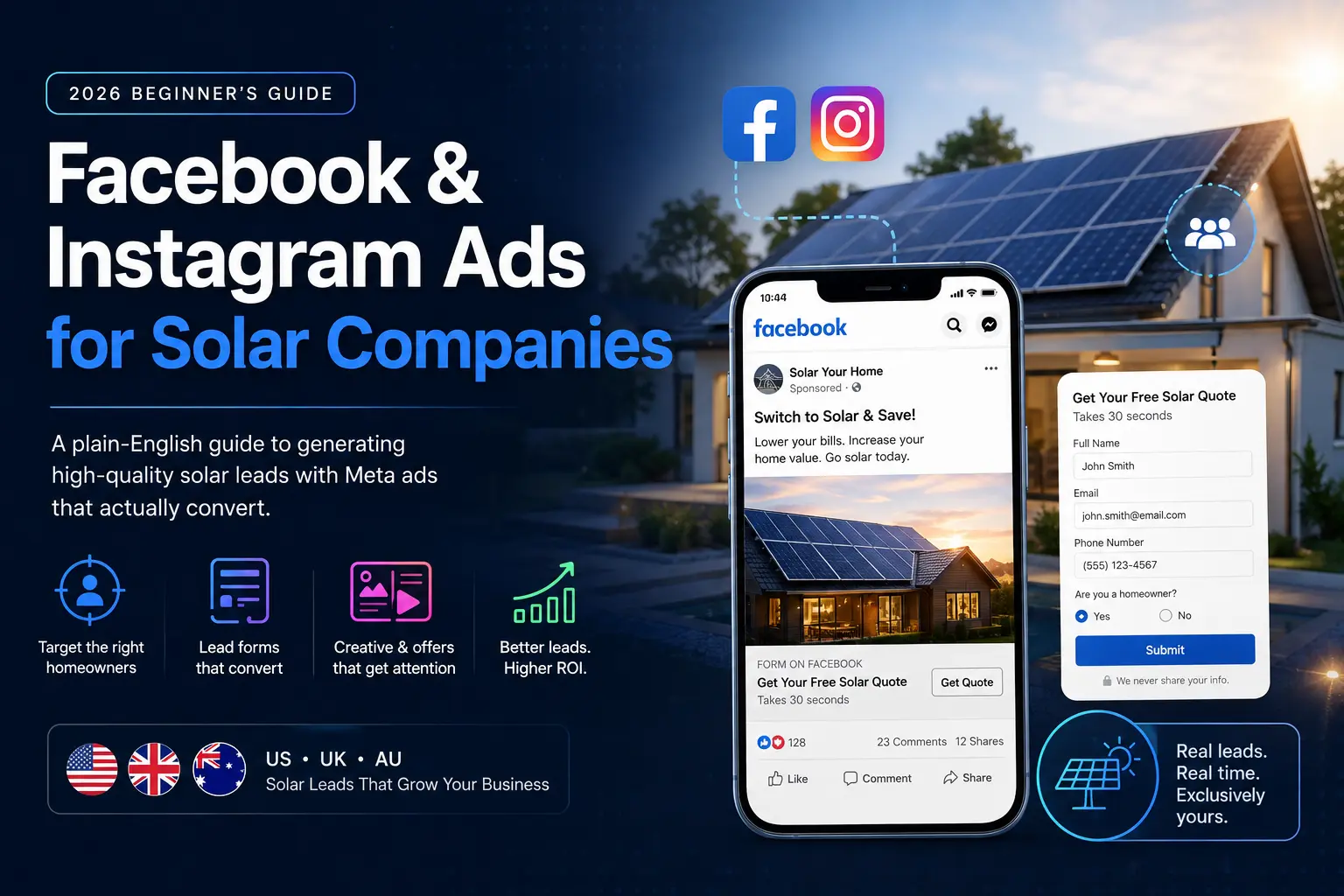
TL;DR
- Meta ads (Facebook + Instagram) let solar companies target homeowners directly by location, home ownership, and interests — instead of waiting for people to search.
- Lead form ads are the most common format for solar because they capture the homeowner's details without making them leave the app.
- Creative and offer matter more than most businesses expect — a generic "get a free quote" ad rarely performs as well as one built around a specific incentive or local angle.
- Most solar companies see the biggest jump in results once they stop running ads themselves and get exclusive, properly-targeted campaigns built for their market.
If you've only ever generated leads through referrals, door-knocking, or buying from an aggregator, Meta ads can feel like a different world. But the mechanics are simpler than they look, and for solar specifically — a high-value, considered purchase — Facebook and Instagram are two of the most effective channels available, because they let you reach homeowners before they've even started searching for quotes.
Why Solar Companies Use Meta Ads (Not Just Google)
Google Ads waits for someone to search "solar panels near me." That's valuable, but it's also expensive and limited to people already in research mode. Meta ads work differently — they let you put your offer in front of homeowners based on where they live, their age, home ownership likelihood, and interests, before they've actively started looking. For solar, where the buying journey often starts with "I saw an ad and got curious" rather than "I searched for it," that's a major advantage.
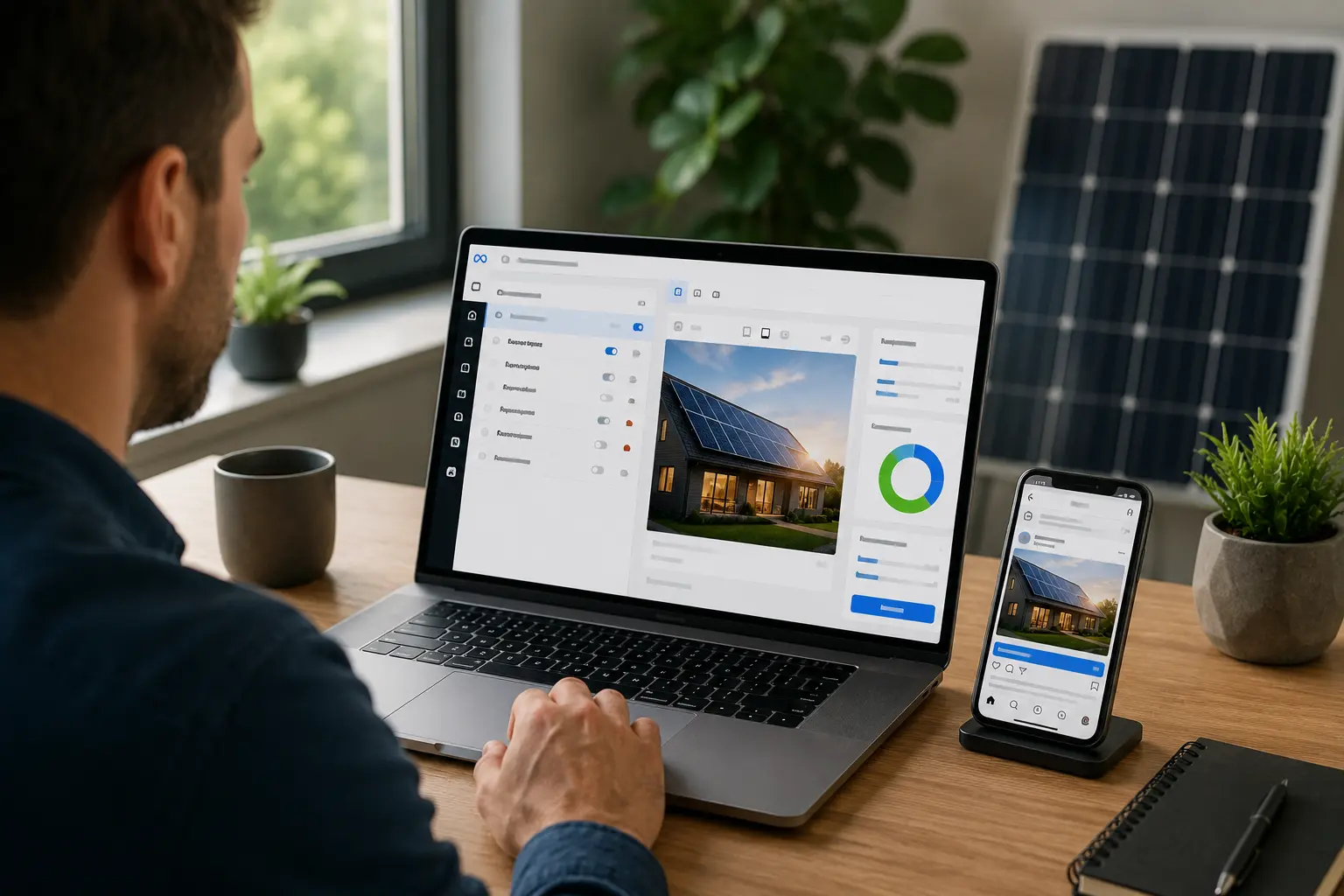
The Ad Format Most Solar Companies Actually Use: Lead Forms
Instead of sending people to a website (which adds friction and load time), most solar campaigns use Meta's native lead form ads. The homeowner taps the ad, a form pre-filled with their name and contact info opens inside the app, they answer a couple of qualifying questions, and submit — all without leaving Facebook or Instagram. This is a big part of why solar lead costs through Meta are often lower than other channels: less friction means more completed forms.
| Element | Why it matters for solar |
|---|---|
| Targeting (location, homeowner status, age) | Keeps spend focused on people who could realistically qualify for solar. |
| Creative (image/video + headline) | Determines whether someone stops scrolling — this is where most campaigns win or lose. |
| Offer (rebate, free audit, "check eligibility") | A specific, low-commitment offer converts far better than a generic "get a quote." |
| Qualifying questions in the form | Filters out renters, wrong roof types, and unqualified leads before they reach your phone. |
What Makes Solar Ad Creative Actually Work
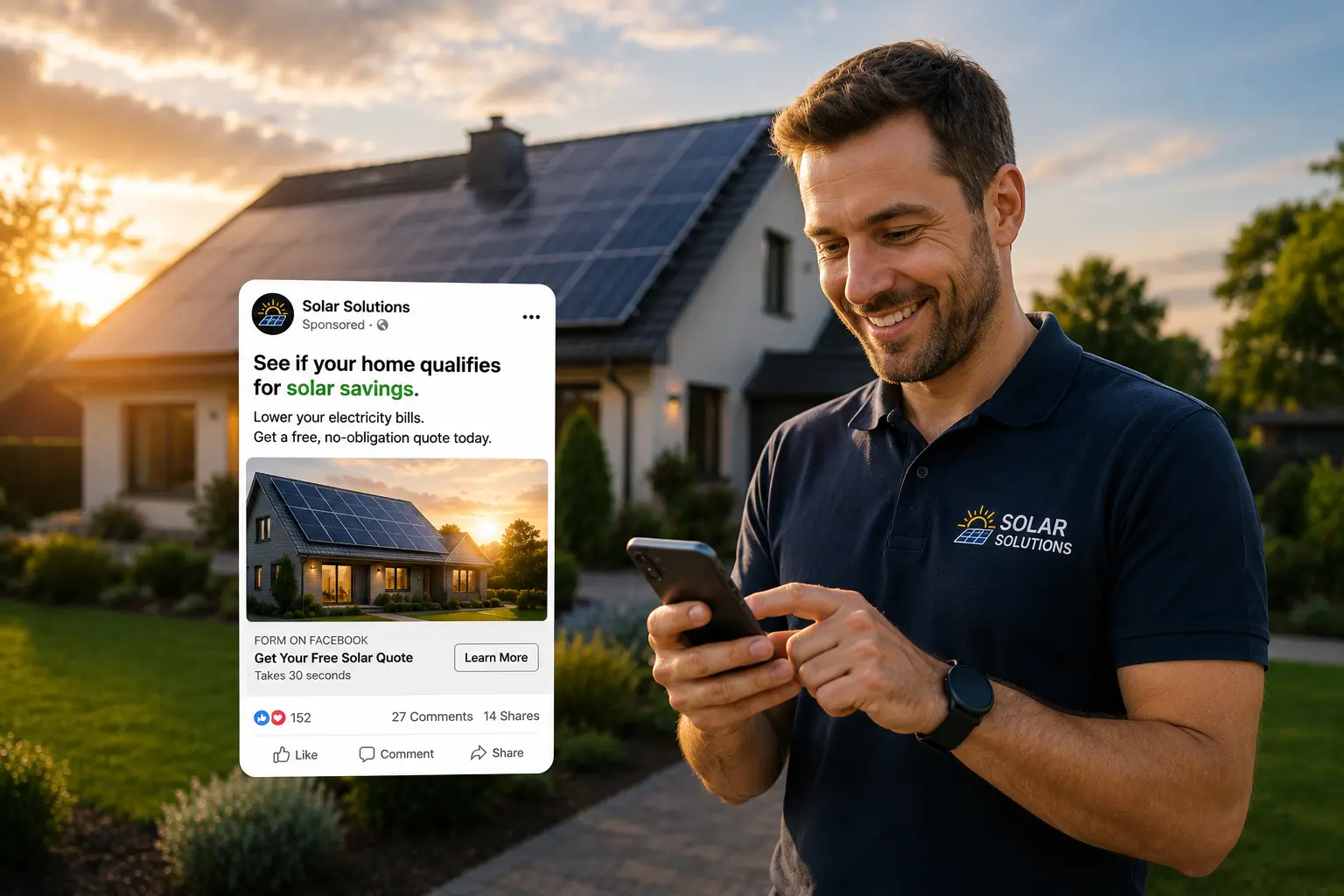
The single biggest mistake solar companies make when they try Meta ads themselves is running one generic ad — usually a stock photo of solar panels with "Get a Free Quote" — and expecting it to perform like a professionally built campaign. In practice, the ads that consistently generate quality leads tend to lean on a specific, local angle: government incentives that may be expiring, a real before/after installation, or a simple "does your roof qualify?" hook that plays to curiosity rather than a hard sell.
Homeowners don't scroll Instagram looking for a solar company. Your ad has about a second and a half to earn a second look — which is why creative and offer usually matter more than targeting precision.
Exclusive Campaigns vs Buying Shared Leads
There's an important distinction worth understanding before you start: running your own Meta ads (or having an agency run them for you) means every lead that comes in belongs only to you. That's very different from buying leads from an aggregator, where the same homeowner's details might be sold to three or four other solar companies at the same time. Exclusive campaigns typically cost more per lead upfront, but the conversion rate is usually significantly higher — because you're not racing competitors to the phone.
Getting Started: What to Expect
A properly set up solar campaign usually needs a Meta Business account, a verified ad account, a lead form built with the right qualifying questions, and a pixel or CRM integration so leads route somewhere your team can act on them fast. Most solar business owners who try to DIY this find the setup isn't the hard part — the ongoing testing, creative refresh, and audience tuning is where results are actually made or lost.
If you'd rather skip the trial-and-error and get exclusive, real-time leads built specifically for your market, that's exactly what we set up for solar installers, sellers, and technicians across the US, UK, and Australia.
Get a Free Lead AuditWant leads like this for your solar business?
We run exclusive Meta ad campaigns for solar installers, sellers, and technicians — no long-term contracts.
Get a Free Lead Audit