
Solar Financing Options Explained: $0-Down, Loans, Leases & PPAs Compared
By SolarLeadAds Team · September 2, 2026
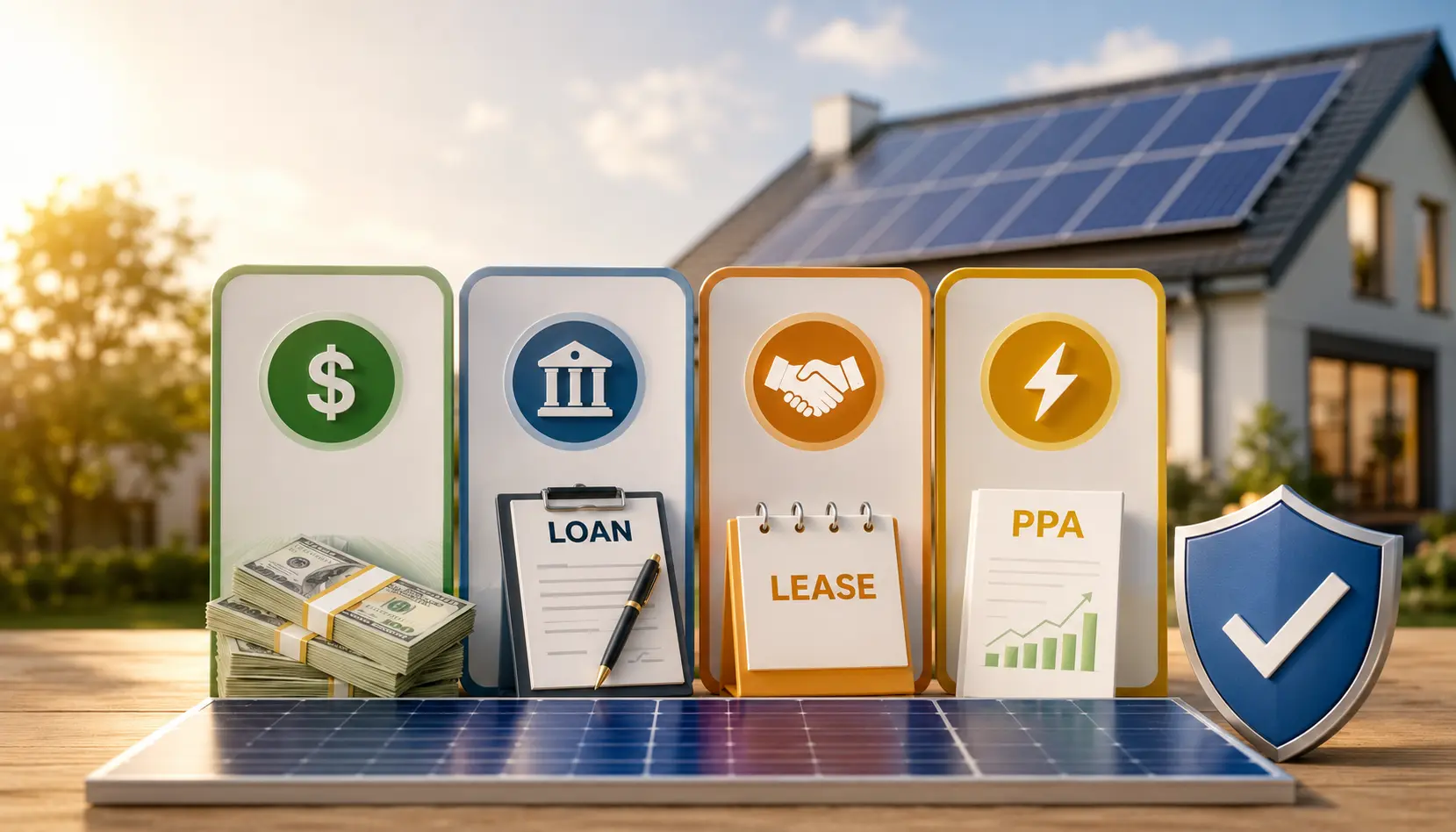
Ask any solar sales rep what kills deals in the final stage, and financing confusion is almost always near the top of the list. A homeowner can be fully convinced solar makes sense and still stall out because they don't understand the difference between a loan, a lease, and a power purchase agreement — or they assume "no money down" always means the same thing across every option.
This post breaks down the main financing paths in plain language, which doubles as content your sales team can point leads to before a call, saving time on the basics during the actual consultation.
Cash Purchase
Paying outright means no interest, no monthly payment to a lender, and full ownership from day one — which typically means the homeowner also captures the full value of any available tax credits or rebates directly. The trade-off is the upfront cost, which puts this option out of reach for a large share of homeowners regardless of how much they want to switch to solar.
Solar Loans
A solar loan lets the homeowner own the system while spreading the cost over several years, often structured so that estimated monthly savings on their electric bill roughly offset the loan payment. Ownership means they typically still qualify for available tax credits and incentives, unlike lease or PPA structures where the financing company often retains that benefit.
The trade-off: total cost over the life of the loan is higher than a cash purchase due to interest, and approval depends on the homeowner's credit profile.
Solar Leases
With a lease, a third-party company owns the system and the homeowner pays a fixed monthly fee to use it — similar in structure to leasing a car. This usually means little to no upfront cost and no maintenance responsibility, since the leasing company typically owns and services the equipment.
The trade-off: the homeowner generally doesn't qualify for tax credits or incentives (the leasing company claims those), and selling the home later can require transferring or buying out the lease, which occasionally complicates real estate transactions.
Power Purchase Agreements (PPAs)
A PPA is similar to a lease in that a third party owns the system, but instead of a fixed monthly fee, the homeowner pays for the actual electricity the system produces — typically at a rate lower than their utility company's price. This can appeal to homeowners who want savings without owning equipment or committing to a fixed payment regardless of production.
The trade-off: monthly costs can vary with weather and system output, and like leases, the tax benefits generally go to the system owner, not the homeowner.
$0-Down Options
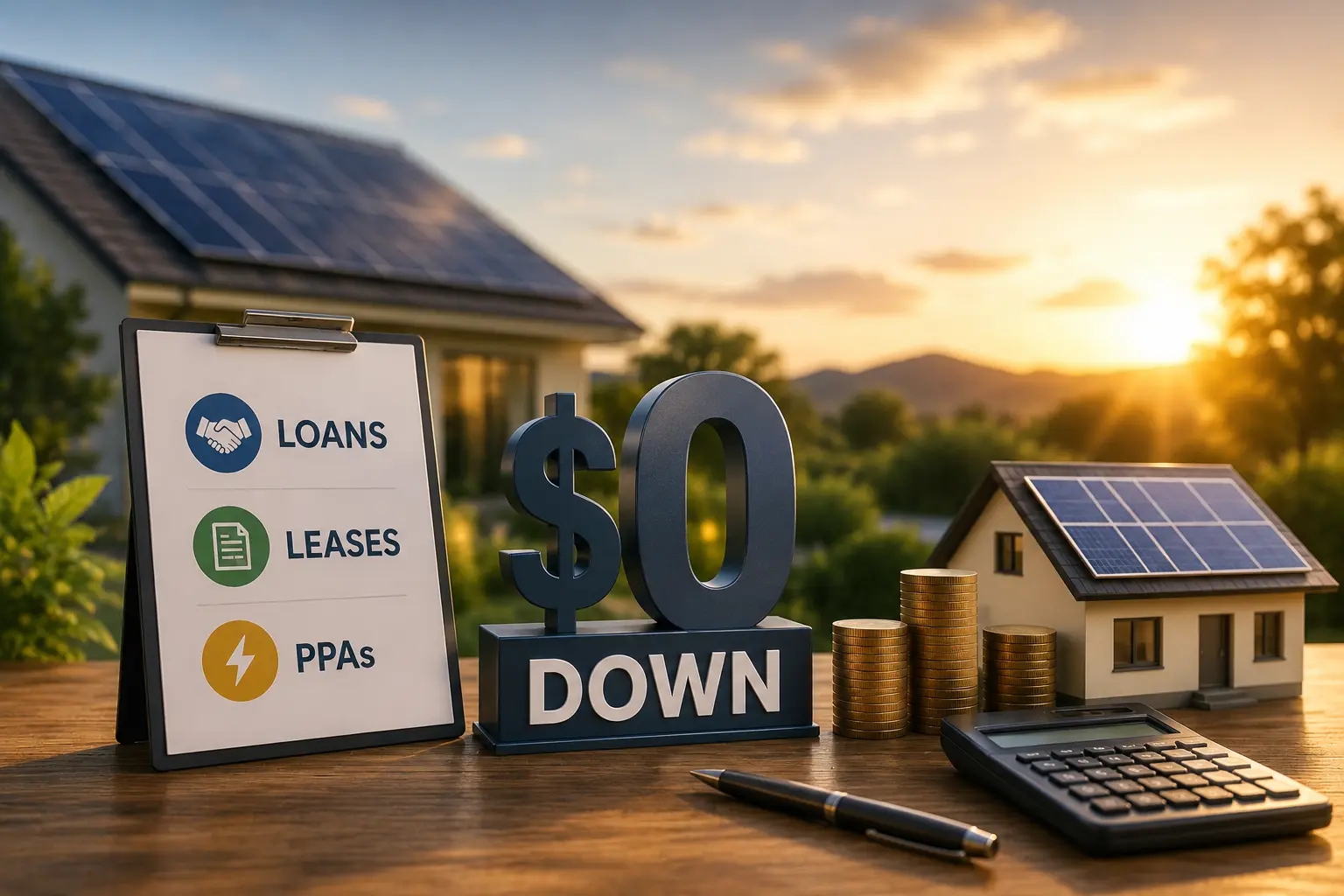
"$0 down" isn't a single financing type — it's a feature that can apply to loans, leases, or PPAs alike. It simply means no upfront payment is required to start. This phrase gets used heavily in solar advertising because it removes the biggest perceived barrier (upfront cost), but homeowners should understand that $0 down doesn't mean $0 total cost — it just shifts when the cost starts.
Why This Matters for Solar Lead Generation
Ads and landing pages that gloss over financing entirely tend to attract leads who get stuck the moment a sales rep brings up actual numbers. Ads and funnels that address financing upfront — even briefly, with something like "flexible $0-down options available" or a short financing explainer on the landing page — tend to attract leads who arrive already comfortable with the general concept, which shortens the sales cycle.
This is part of why our funnel builds for installer and panel/battery seller packages typically include a brief financing overview section rather than sending cold traffic straight to a bare lead form — it pre-answers the objection that would otherwise surface deep into a sales call.
A Note on Regional Differences
Financing structures and their popularity vary meaningfully by market. In the US, solar loans and $0-down PPAs are widely available and heavily marketed. In the UK and Australia, financing options and incentive structures differ significantly by region and utility provider, so content and ad messaging around financing need to be localized rather than copy-pasted from a US-focused template.
The Bottom Line
Financing confusion is one of the most common — and most avoidable — reasons solar leads stall before converting. Addressing it clearly and early, whether in your ad copy, landing page, or a resource like this one, helps leads arrive at the sales conversation already past the "how would I even pay for this" hesitation.
Want a funnel that pre-addresses financing objections before leads reach your sales team? See how our packages are built, or get a free lead audit to see what a financing-aware funnel could do for your close rate.
Want leads like this for your solar business?
We run exclusive Meta ad campaigns for solar installers, sellers, and technicians — no long-term contracts.
Get a Free Lead Audit