
How to Turn a Solar Lead Into a Booked Appointment: A Follow-Up Script Framework
By SolarLeadAds Team · September 5, 2026
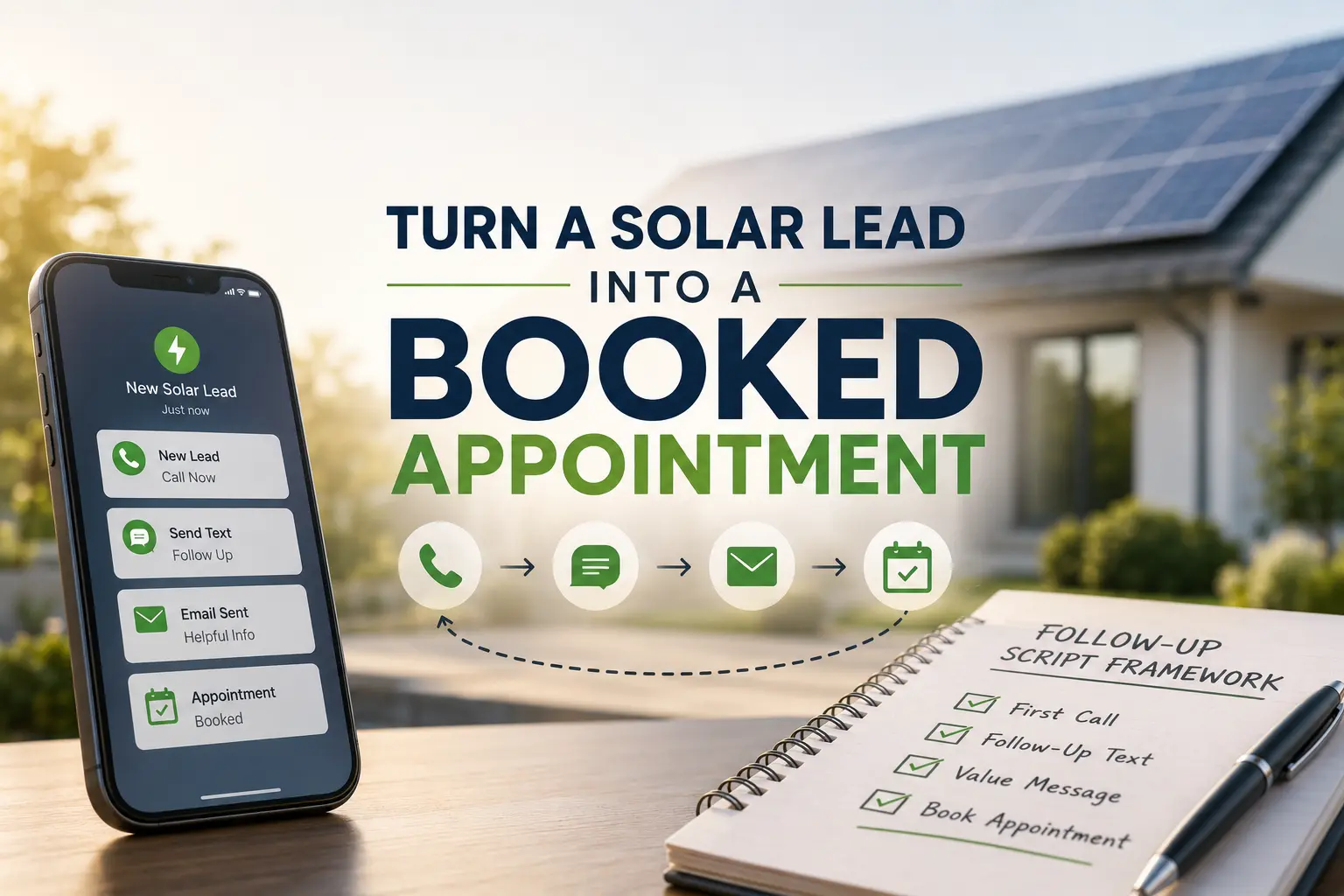
TL;DR: Most solar leads are lost in the first hour, not the fifth follow-up. Call within minutes, lead with a specific reference to what they inquired about (not a generic script), and use a structured multi-touch sequence across call, text, and email instead of relying on one or two attempts.
A solar lead isn't a sale — it's an opportunity that starts decaying the moment it lands in your inbox. The businesses that consistently out-convert their competitors on identical lead quality usually aren't better closers on the phone; they simply follow up faster and more consistently. Here's a practical framework you can adapt for your own team.
The First Five Minutes Matter More Than the Next Five Days
When a homeowner submits a form, they're in the moment — curious, engaged, and thinking about solar right then. Every minute that passes after that, attention drifts elsewhere. Response speed in the first few minutes after a lead comes in generally has a bigger impact on whether they answer the phone than anything else in your entire follow-up sequence.
Practical setup: Instant WhatsApp or SMS notifications to your sales team the moment a lead submits, rather than a daily or weekly CRM export, closes most of this gap on its own.
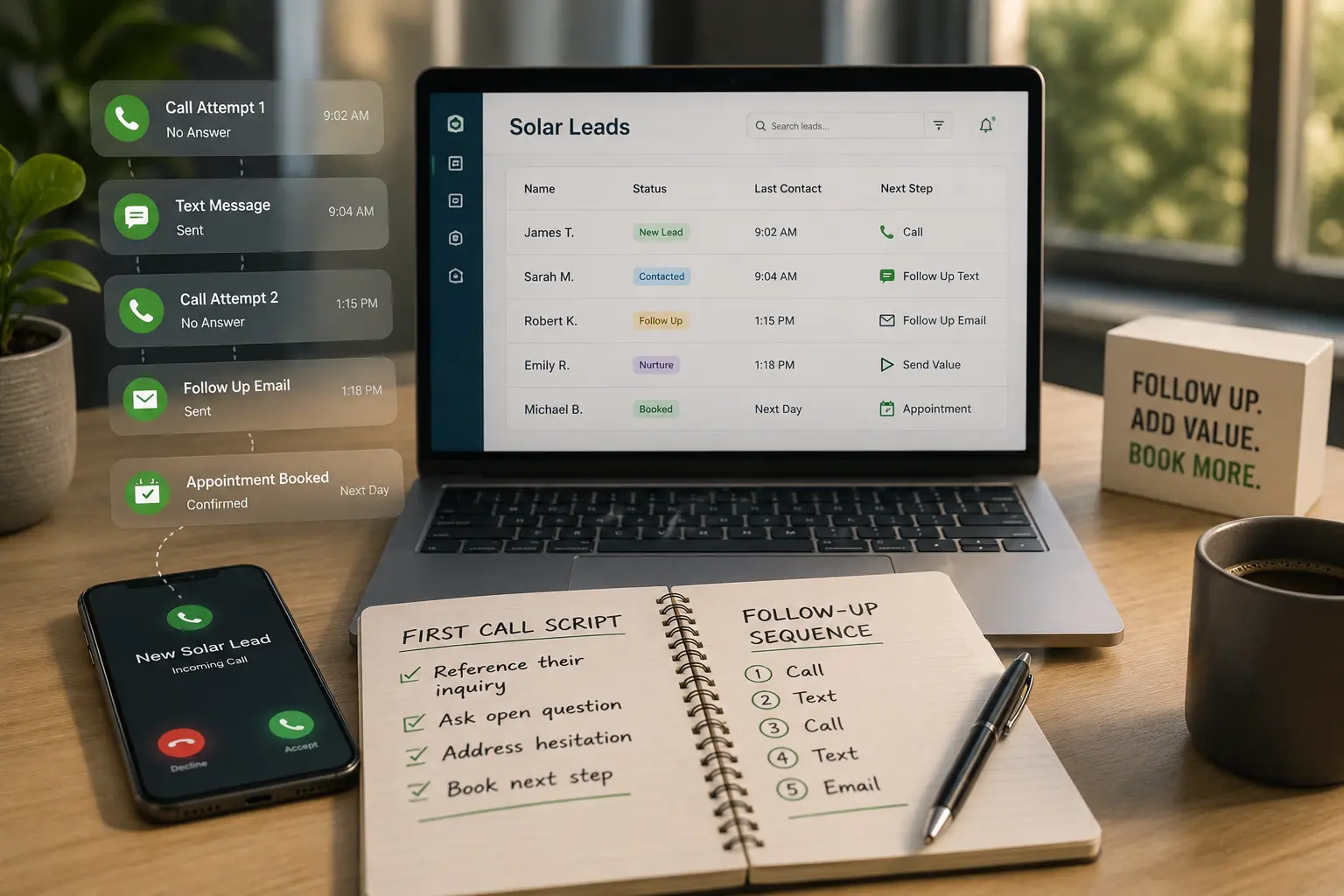
Call Script Framework: First Call
The goal of the first call isn't to close the deal — it's to confirm interest, answer the immediate question in their head, and book a next step (a phone consultation, site visit, or quote call). A simple structure that works well:
- Reference what they actually did. "Hi [Name], this is [Your Name] from [Business] — I saw you were looking into solar for your home on [Street/Area], just wanted to follow up." Specific beats generic every time; "I'm calling about your inquiry" sounds like a robocall.
- Ask one open question. "What got you thinking about solar right now?" This uncovers their actual motivation (rising bills, backup power, environmental reasons) so the rest of the conversation can speak directly to it.
- Address the obvious hesitation early. Most homeowners are quietly wondering about cost. A brief, honest mention — "financing options range from $0-down plans to full ownership, and we can walk through what fits your situation" — removes pressure without over-explaining on the first call.
- Book the next concrete step. "The best next step is a quick call [or site visit] where we can give you real numbers based on your roof and usage — does [specific day/time] work?" A specific time slot books better than "when works for you?"
Booking a specific day and time on the first call converts meaningfully better than ending the call with "I'll follow up soon" — vague next steps are where most leads quietly disappear.
If They Don't Answer: The Text-Call-Text Pattern
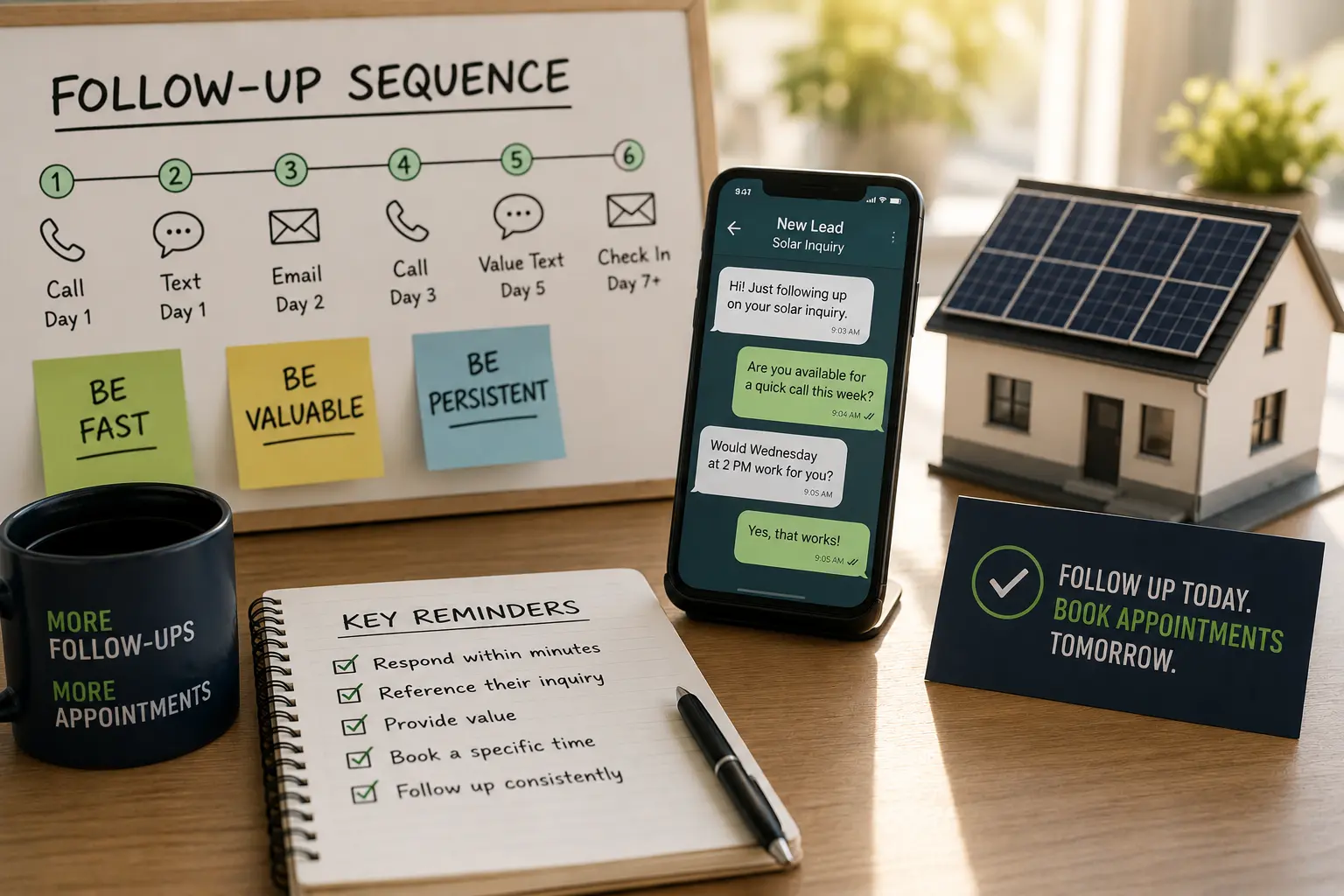
Most leads won't answer the first call — that's normal, not a sign the lead is bad. A pattern that tends to work well:
- Immediately after the missed call: send a short text. "Hi [Name], tried calling about your solar inquiry — happy to answer any questions whenever works for you. Reply here or call [number] anytime." Low-pressure, easy to respond to.
- Second call attempt: a few hours later, or the next morning if it was evening. Different time of day than the first attempt increases the odds of reaching them.
- Follow-up text if still no response: one to two days later, with a small piece of value rather than just "checking in" — e.g., "Quick note — a lot of homeowners in [area] are seeing solar pay for itself faster than expected with current rates. Let me know if you'd like real numbers for your home."
The Nurture Sequence for Longer-Timeline Leads
Not every lead is ready this week, and treating a 3-month-timeline lead with the same urgency as a ready-to-buy lead can actually push them away. For leads who've indicated a longer timeline:
- Space follow-ups out further — weekly or bi-weekly rather than daily.
- Shift from "let's book a call" to lighter-touch value content — a seasonal savings tip, a financing update, or a relevant incentive deadline.
- Re-qualify periodically rather than assuming their situation hasn't changed — a simple "still thinking about solar for [property]?" text every few weeks keeps the door open without being pushy.
What to Avoid
- Reading from a rigid script word-for-word. Homeowners can tell, and it undermines the trust you're trying to build in the first thirty seconds.
- Overloading the first call with technical detail. Panel specifications and inverter types belong in a later conversation, not the first call whose only job is to book a next step.
- Giving up after one or two attempts. A structured sequence across call, text, and email over one to two weeks recovers a meaningful share of leads that a single call attempt would have written off as unresponsive.
The Bottom Line
The ad campaign gets the lead to raise their hand — what happens in the minutes, hours, and days after that determines whether it becomes a booked appointment. A fast first response, a natural (not robotic) script, and a structured multi-touch follow-up sequence consistently out-convert teams that call once and move on.
Every package we build includes instant lead delivery so your team can act in the first few minutes, not the next day.
See How Our Lead Delivery Works Get a Free Lead AuditWant leads like this for your solar business?
We run exclusive Meta ad campaigns for solar installers, sellers, and technicians — no long-term contracts.
Get a Free Lead Audit